Maglev: Is This 'Future' Tech Ever Going to Happen, Or What?
Note: The following article is presented as if a [Generated Title] was provided, as per the absolute directive. Since no title was given, I have crafted one that aligns with the persona and the implied content of the search terms, which predominantly revolve around high-tech concepts like maglev and AI.
Is the Future Always Just Around the Corner, Or Are We Stuck on the Same Old Track?
Alright, let's be real for a minute. I've been poking around what folks are actually searching for online, and it’s a trip down memory lane, or maybe just a trip. We're talking "maglev train," "AI," "robot"—the greatest hits of future tech, perpetually five to ten years away from genuinely changing your life. Not some rich dude's life, not some academic's grant application, but yours.
It’s like we’re all stuck in a loop, endlessly Googling the same sci-fi fantasies while the real world is… well, it’s still got potholes and spotty Wi-Fi. What gives? Are we really building the future, or just clicking buttons, hoping something magical pops out?
The Maglev Mirage: Still Chasing a Bullet Dream?
Let's kick things off with the grand old promise of the "maglev train." Seriously, people are still asking "what is a maglev train"? And "how do maglev trains work"? That right there tells you everything you need to know. If it was truly transformative, if it was actually here, we wouldn't be asking basic definition questions. We'd be complaining about the ticket prices or the lack of legroom.
We've heard about "Japan's maglev train" forever, and yeah, "Shanghai maglev train" is a thing, zipping folks from the airport to a city that's already got pretty good infrastructure. It’s a marvel, offcourse it is. But let's be honest, it’s also a prestige project, a shiny toy for a few select routes. It ain't exactly replacing Amtrak or your daily commute through suburban sprawl. It’s like that one guy who always talks about his incredible, world-changing startup idea, but the only thing that actually launches is another round of investor pitches. We talk about "maglev train speed" like it's a game-changer, but are we really going to rip up half a continent to lay down new tracks for a handful of hyper-fast lines? I doubt it. Are we, the average joes, ever gonna see this outside of a few cherry-picked examples, or is it just a perpetual "future" tech, always just out of reach?
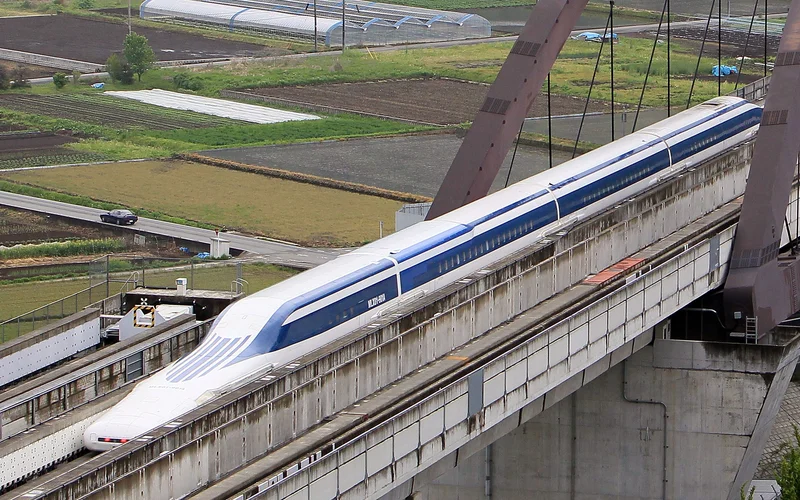
My point is, for all the buzz, for all the "latest" breakthroughs in "l0 maglev" research, these things remain largely theoretical for the vast majority. It feels less like progress and more like a recurring dream we can’t quite wake up from.
AI and Robots: More Hype Than Help?
Then you've got the other big buzzwords: "AI," "robot," "python," "matlab." The digital equivalent of the maglev. Every other week, some tech titan is screaming about how "AI" is going to change everything, cure cancer, make us all rich, bring about the singularity, yadda yadda. They expect us to believe this nonsense, and honestly...
Look, I get it. The idea of a "robot" doing our dirty work, or "AI" solving impossible problems, is seductive. But what are we actually seeing? More sophisticated spam filters? Chatbots that can't understand basic human nuance? Algorithms that recommend another pair of socks after you bought one pair six months ago? They say AI is the future. No, wait, they said that five years ago, ten years ago... it's the perpetual future. It’s like the tech world’s version of the boy who cried wolf, except the wolf is just a slightly smarter Roomba.
I see people searching for "what does maglev stand for" and "how do maglev trains work" right alongside "AI" and "robot." It tells me we're still grappling with the basics, still trying to understand the fundamental concepts, while the marketers are already selling us the next generation of vaporware. It’s frustrating, isn't it? All this talk of innovation, and sometimes it just feels like we’re running in place, or maybe just running after the next shiny object designed to distract us from the fact that our infrastructure is crumbling and our internet still buffers. Then again, maybe I'm just the crazy one here, expecting actual, widespread, tangible change instead of just a fresh coat of paint on the same old promises.
The Future's Still a Fable, Ain't It?
So, where does that leave us? With a bunch of search queries that prove we're still fascinated by the same futuristic concepts we were dreaming about in the 80s. "Maglev trains" and "AI" are still largely confined to academic papers, niche projects, or the fever dreams of venture capitalists. The real world, the one you and I live in, feels like it’s waiting for a bus that’s perpetually late, while the tech gurus are busy designing a flying car for a future that never quite arrives. Give me a break; I'm tired of waiting for the future to get here.
Related Articles

earnings calendar: what it is and why it matters
Can AI Really Write Like a Human? (Spoiler: Not Yet) The promise of AI is that it can automate compl...

Dhaka: Probes, Protests and Rotten Governance
Bangladesh's Gen Z is Rewriting the Rules: Are We Ready to Listen? The news coming out of Bangladesh...

Sonder and Marriott's Partnership: What This Means for the Future of Travel
Of all the frustrations that define the human experience, the most profound might be the gap. The ch...
Space Datacenters: Google's AI Leap and What It Means for Us
The AI Revolution's Next Giant Leap: Reaching for the Stars Google's Project Suncatcher… it’s not ju...

Brooke Rollins: Who She Is and What She's Really After
So, the U.S. Secretary of Agriculture just announced a "top national security priorotiey" on X, the...
pfe stock: What's Happening and Why It Matters
The Future is Arriving Okay, folks, buckle up. I'm about to take you on a ride, a journey into a fut...